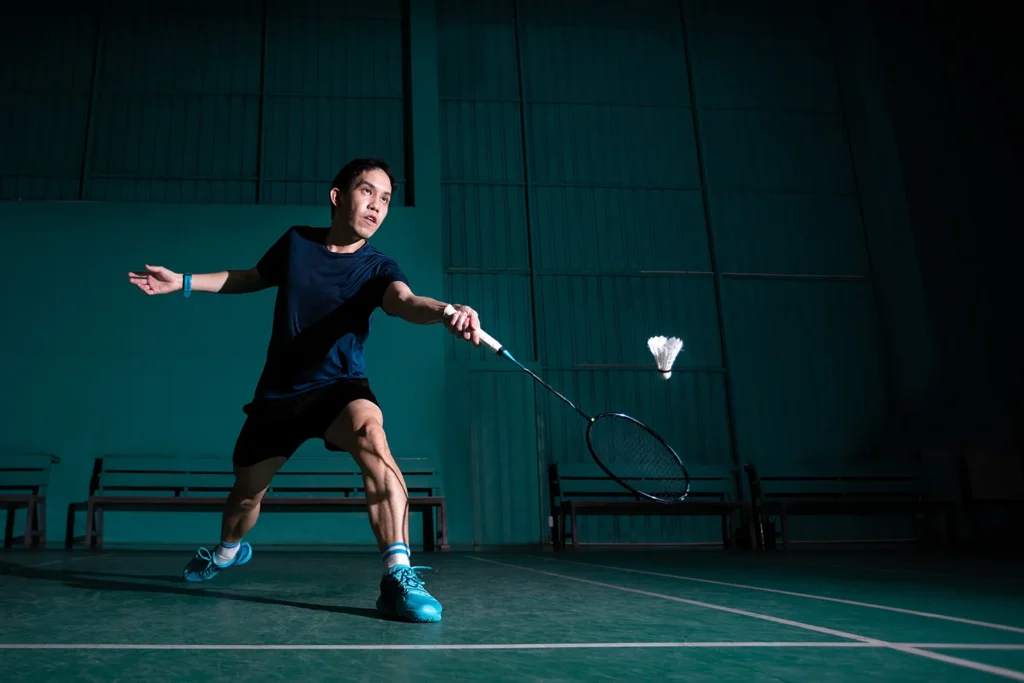
Badminton is hugely popular in Thailand. It’s a sport that demands speed, agility, and a great deal of explosive arm power — and because the movement patterns involve jumping, lunging, and rapid overhead arm use, badminton players (especially amateurs) often suffer repeated musculoskeletal injuries. Understanding these problems and being prepared to deal with them will let you enjoy your game for the long run.
5 Common Pain Problems in Badminton Players
Badminton injuries generally fall into two main groups: overuse injuries and acute injuries.
1. Shoulder Pain / Rotator Cuff Tendinopathy
Overhead strokes like the smash and the clear require forceful, repeated rotation and swinging of the shoulder joint, which can inflame or slightly tear the tendons of the rotator cuff. Symptoms: a dull ache when raising the arm overhead, or a sharp stab when swinging into a full-power smash.
2. Lateral Epicondylitis (Tennis Elbow)
Even though it’s called tennis elbow, it’s common in badminton players too. The main cause is repeated wrist flicking or backhand strokes, especially with faulty technique, which inflames the muscles and tendons that extend the wrist at the lateral epicondyle — the bony bump on the outside of the elbow.
3. Knee Pain / Patellar Tendinopathy
Explosive forward lunges to reach the shuttle, and repeated jumping and landing, put high loads on the patellar tendon and kneecap. Symptoms: pain below the kneecap, usually worse going down stairs or when dropping into a low lunge.
4. Ankle Sprains
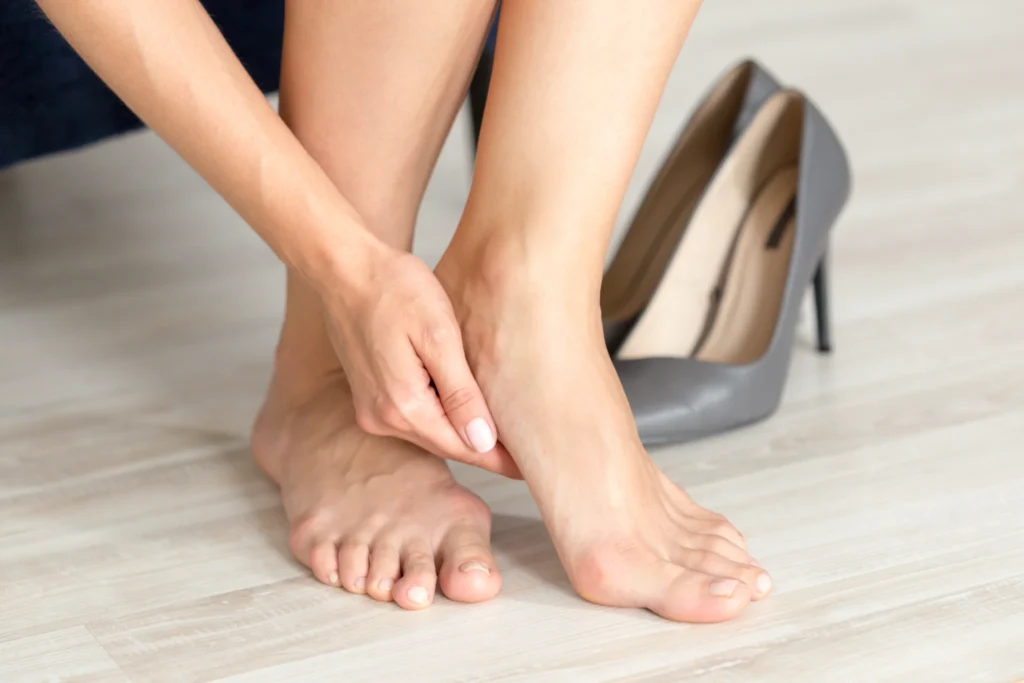
This is the most common acute injury in athletes who move laterally at speed. Planting the foot or landing with the ankle rolling inward injures the outer ankle ligaments. Symptoms: pain, swelling, and an inability to bear weight right after the injury.
5. Calf and Achilles Tendinopathy
The explosive push-offs used to jump or lunge work the calf muscles hard. Without an adequate warm-up or good flexibility, the calf can tighten or tear, or the Achilles tendon can become inflamed. Symptoms: tightness in the calf, or a sharp pain just above the heel.
Prevention and Rehabilitation for Sustainable Play
Injury prevention in badminton focuses on core strength and on the joints that swing and jump.
1. Pre-Play Preparation (Warm-up & Conditioning)
- Dynamic warm-up: spend 10–15 minutes on dynamic stretching — arm circles, leg swings, and light lunges — to activate the muscles and raise blood flow.
- Targeted strengthening: focus on rotator cuff exercises with a resistance band to stabilize the shoulder, and forearm strength training to reduce the load on the elbow.
2. Choosing the Right Equipment
- Shoes: choose badminton-specific shoes designed to support lateral movement, with soles that grip well. Running shoes are not suitable for badminton.
- Racket: choose a racket whose weight and string tension suit your strength, to reduce the load on your elbow and shoulder.
3. Early Treatment and Rehabilitation
- Acute injuries (such as an ankle sprain): follow R.I.C.E. (Rest, Ice, Compression, Elevation) — rest and apply a cold compress, and see a doctor promptly if you cannot bear weight.
- Overuse injuries (such as shoulder or elbow pain): rest from the activity that causes the pain and consult a rehabilitation medicine physician for treatment with suitable physical therapy equipment, and learn a rehabilitation program focused on stretching, strengthening weak muscles, and adjusting your movement mechanics (such as your swing).
If you have elbow or shoulder pain that has lasted more than 2 weeks, rubbing on ointment may not be enough. A proper diagnosis, treatment with suitable physical therapy equipment, and targeted muscle training under expert supervision will help you get back to smashing at full power without the pain coming back. If you have pain that worries you, you can consult a rehabilitation medicine specialist at Freesia Rehab Clinic.