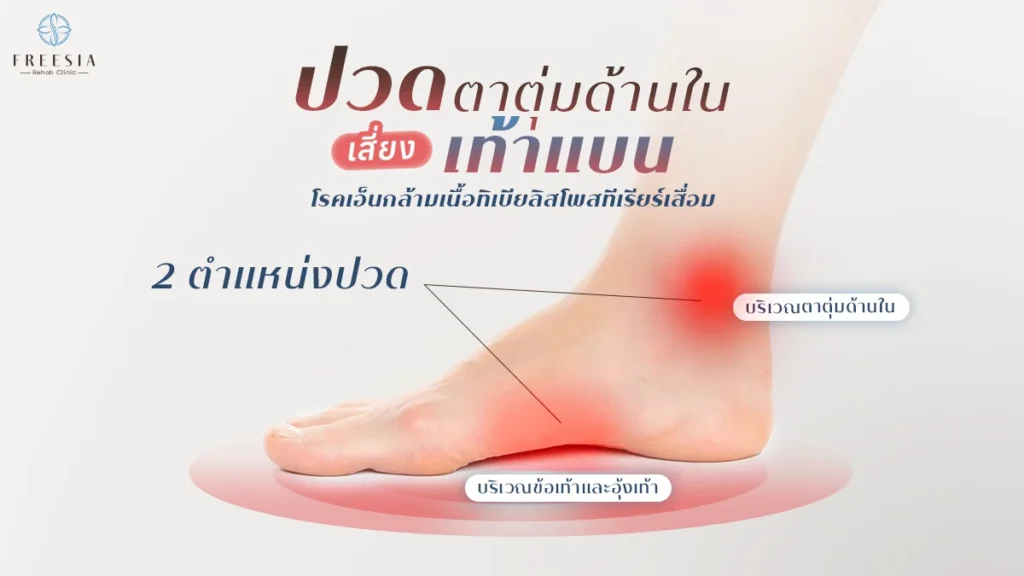
Flatfoot in adults or the elderly is often caused by posterior tibialis tendon dysfunction (PTTD) — a condition in which the posterior tibialis tendon, which supports the arch of the foot and the ankle, becomes inflamed and degenerates until it can no longer function effectively. This leads to sole-of-foot pain and a progressive flatfoot deformity.

Causes of Posterior Tibialis Tendon Dysfunction
- Overuse: activities that place excessive demand on the feet, such as running, jumping, or prolonged standing
- Aging: the tendon degenerates naturally with age
- Anatomical factors: people with pre-existing flat feet or inward-rolling ankles are at higher risk of PTTD
- Injury: direct injury to the posterior tibialis tendon
- Underlying conditions: certain diseases, such as rheumatoid arthritis or diabetes, may increase the risk of PTTD
Symptoms of Posterior Tibialis Tendon Dysfunction
- Pain on the inner side of the ankle and foot, especially over the posterior tibialis tendon
- Swelling on the inner side of the ankle
- Flatfoot deformity: the arch collapses, making the foot look flatter than normal
- Inward-rolling ankle: the heel tilts inward, making the ankle look deformed
- Difficulty walking: pain and flatfoot make walking difficult, especially on uneven surfaces
- Weakness: the posterior tibialis muscle loses its function
Treating Posterior Tibialis Tendon Dysfunction
- Activity rest: avoid activities that trigger the pain
- Cold compresses: apply ice to the painful area to reduce swelling and pain
- Medication: painkillers or non-steroidal anti-inflammatory drugs (NSAIDs) to reduce pain and inflammation
- Physical therapy: exercises to build strength and flexibility in the muscles, plus physical modalities — such as high-power laser (HPL) to reduce inflammation, pain, and swelling, and focused extracorporeal shockwave therapy (fESWT) to stimulate repair of the posterior tibialis tendon
- Foot support and footwear modification: orthotic insoles or ankle supports to help support the arch and reduce pain
- Surgery: in severe cases that don’t respond to other treatments, surgery may be considered
Preventing Posterior Tibialis Tendon Dysfunction
- Exercise: training to build strength and flexibility in the ankle and foot muscles
- Choosing proper footwear: shoes with good arch support and the right fit
- Weight control: keeping your weight in the normal range to reduce the load on the feet
- Avoiding overuse: steering clear of activities that place excessive demand on the feet
If you have pain on the inner side of the ankle and foot, or notice your arch flattening, you should see a doctor for proper diagnosis and treatment. Treating it early prevents the condition from worsening and helps you return to your normal daily life. If you have symptoms, you can consult a rehabilitation medicine specialist at Freesia Rehab Clinic, Rama 3.