
Frozen Shoulder: Understanding, Treating, and Preventing It
Imagine waking up one day and realizing you can’t lift your arm to brush your hair. Or experiencing a sharp, shooting pain just from reaching for something on a high shelf. These could be the early warning signs of a “Frozen Shoulder” (medically known as Adhesive Capsulitis) , one of the most frustrating conditions commonly found in people aged 40 to 60.
What is a Frozen Shoulder?
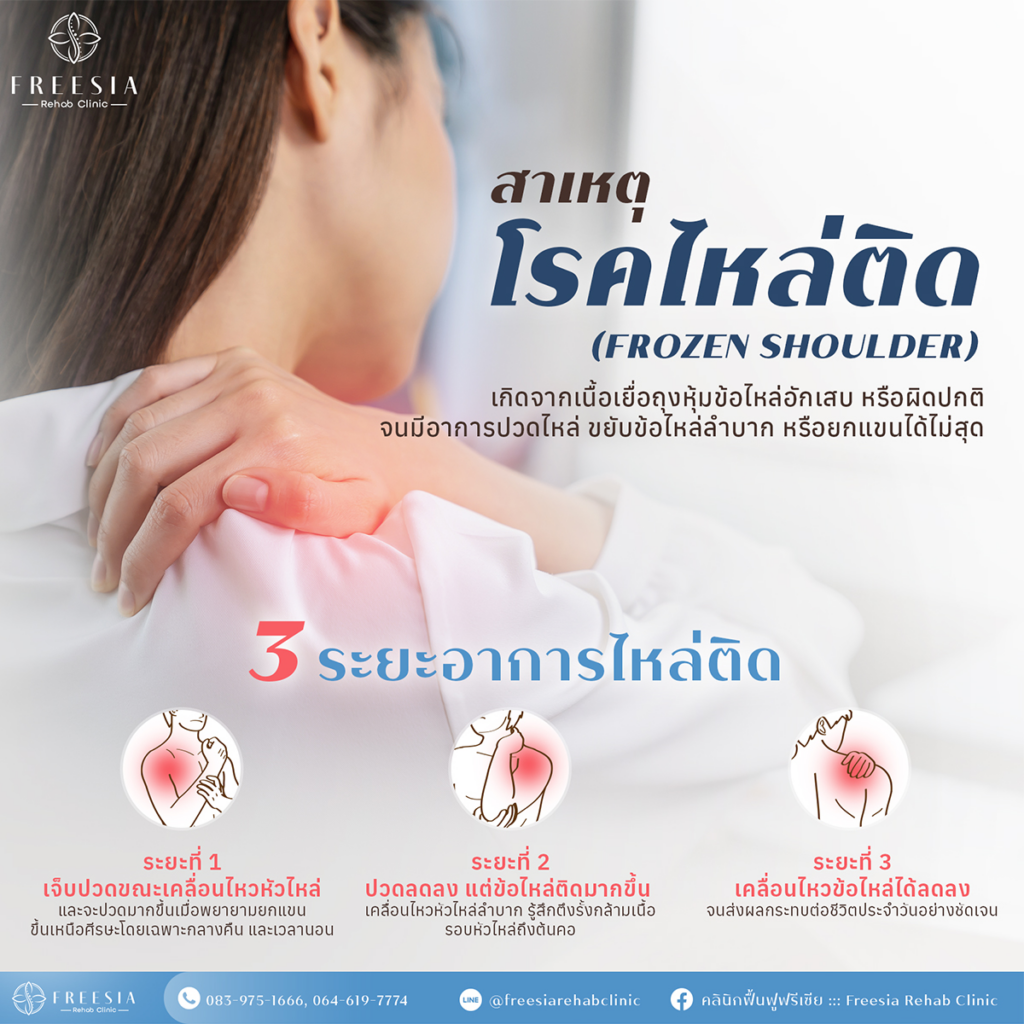
This condition occurs when the connective tissue surrounding the shoulder joint (the joint capsule) becomes abnormally thick, stiff, and inflamed. This limits the joint’s space and restricts movement in every direction. This global stiffness is exactly what differentiates a frozen shoulder from general shoulder pain, which usually hurts only when moving in specific directions.
Who is Most at Risk?
- People with Diabetes: They face a 2 to 4 times higher risk than the general population.
- People with Thyroid Disorders.
- Anyone with Prolonged Shoulder Immobility: Such as after a bone fracture, surgery, or an extended period of bed rest.
- Adults aged 40–60: The condition is also notably more common in women than men.
The 3 Stages of Frozen Shoulder You Need to Know
- Stage 1: The Freezing Stage (6 weeks to 9 months)
You will experience severe pain during movement and even at rest, especially at night. Your shoulder’s range of motion will begin to decrease. This is the stage where many people mistakenly shrug it off as “just regular shoulder pain.”
- Stage 2: The Frozen Stage (4 to 6 months)
While the intense pain may begin to subside, the shoulder becomes extremely stiff. Simple daily tasks—like putting on a shirt or reaching for your back pocket—become nearly impossible.
- Stage 3: The Thawing Stage (6 months to 2 years)
Your range of motion will slowly start to improve. However, without proper treatment, your shoulder may never regain its full 100% mobility.
How Physical Therapy Can Help
At our clinic, we tailor your rehabilitation program to the specific stage of your condition:
- During the Freezing Stage: We focus on pain management using advanced therapeutic modalities and gentle, targeted stretching.
- During the Frozen Stage: We emphasize Joint Mobilization and structured stretching techniques to systematically expand your range of motion.
- During the Thawing Stage: We shift the focus toward targeted strengthening and Functional Training to help you get back to your normal daily activities seamlessly.
What NOT to do if you have a Frozen Shoulder:
- Don’t ignore it: Waiting for it to heal on its own can take 2 to 3 years, and your shoulder might never fully recover.
- Don’t push through intense pain: Forcing heavy exercises without professional guidance can severely worsen inflammation, especially during the Freezing Stage.
Get Your Mobility Back with Freesia Rehab Clinic
At Freesia Rehab Clinic, we utilize advanced medical technology to effectively relieve your pain. Our specialized physical therapy programs are designed to restore your joint mobility, improve your range of motion, and get you moving freely again. If you are experiencing any of these symptoms, don’t wait for the stiffness to get worse. We highly recommend consulting with our Physical Medicine and Rehabilitation (PM&R) specialists. Visit us today at Freesia Rehab Clinic, Rama 3.
References: 1) StatPearls NCBI. “Adhesive Capsulitis.” NBK532955. 2) PMC10949050 — Evidence for Combining Conservative Treatments. 3) American Journal of Medicine. “Frozen Shoulder Diagnosis and Treatment.” amjmed.com