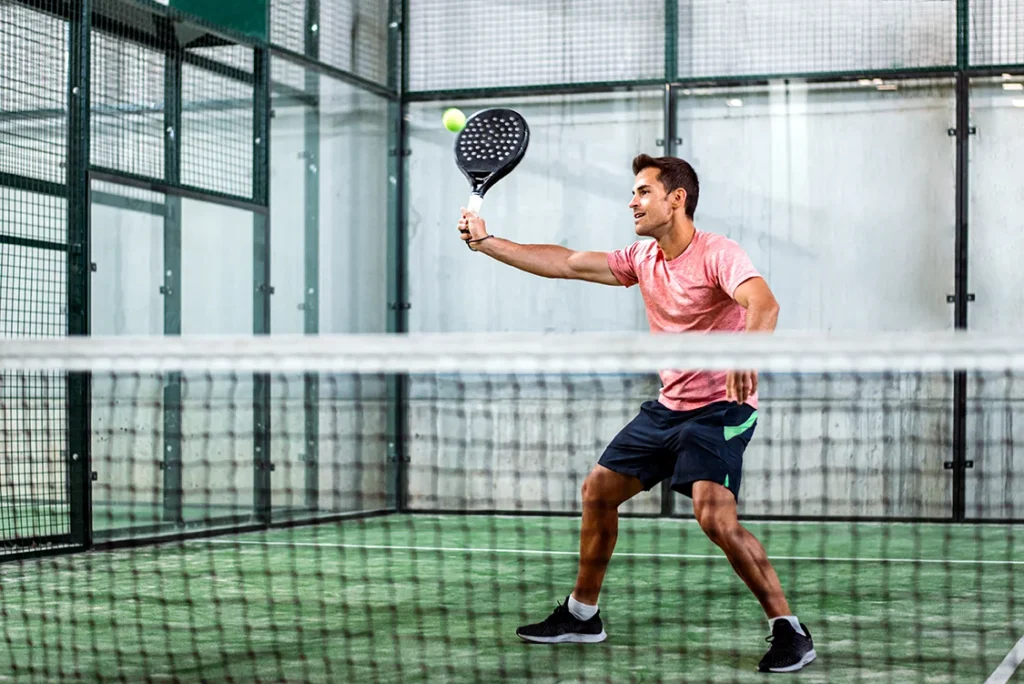
The sport of pickleball is rapidly growing in popularity in Thailand. By blending elements of badminton, tennis, and table tennis, it’s an easy sport to pick up, fun to play, and doesn’t require much space. But it’s precisely this accessibility that leads many players — especially those getting back into exercise — to neglect proper physical preparation.
Although pickleball may look lower-impact than tennis, the movements involved — rapid stop-and-start bursts, sudden changes of direction, and stretching to reach shots at the net — can lead to musculoskeletal injuries if you’re not careful.
The 5 Most Common Pains in Pickleball Players
- Lateral epicondylitis (tennis elbow)
This is the most common complaint in almost every racket sport, including pickleball. The main cause is repeated tightening and flicking of the wrist — especially on backhand shots, or hitting the ball too hard with the wrist instead of generating power from the trunk and shoulders. The symptom is a deep ache over the bony bump on the outside of the elbow (the lateral epicondyle), which worsens when gripping, wringing a towel, or lifting objects.
- Shoulder pain and injuries
Pickleball may not have badminton’s high smashes, but it still involves overhead shots and repeated serving. On top of that, stretching and reaching with the arm to hit distant balls can easily inflame the rotator cuff tendons and the bursae around the joint. The symptom is shoulder pain when raising the arm overhead, or sharp pain when smashing or serving.
- Ankle sprains
The game is played on a small court, which means frequent side-to-side movement and sudden stops. If your shoes aren’t suitable, or the muscles around your ankle are weak, there’s a high risk of the foot rolling and an acute ankle sprain. The symptoms are pain, swelling, and inability to bear weight immediately after the injury.
- Knee pain from lunging
Repeatedly lunging forward to hit dinks at the net places high impact loads on the patellar tendon and the structures around the front of the knee. Rapid changes of direction can also endanger the meniscus. The symptom is anterior knee pain, especially when squatting or going up and down stairs.
- Lower back pain
This tends to affect people with poor flexibility or weak core muscles. Twisting through volleys and bending forward to reach low balls forces the back muscles to work hard and leads to tightness. The symptom is stiffness and aching in the lower back, usually worse after playing or in the morning after waking up.
Preventing and Managing the Pain
- Warm-up and cool-down
Before playing, spend at least 10 minutes on a dynamic warm-up — joint circles, stretching, and light jumping. After playing, spend 5–10 minutes cooling down with static stretching, focusing on the calves, thighs, and back.
- Targeted strengthening
- Shoulders/elbows: Build strength in the rotator cuff group and the muscles that control wrist extension, using light weights or resistance bands.
- Lower body: Focus on strengthening the glutes and legs to improve knee and ankle stability, plus planks to build the core.
- Choosing the right equipment
- Shoes: Choose court shoes with good lateral support — not running shoes — to prevent ankle sprains.
- Paddle/ball: Check that the grip size fits your hand and that the paddle weight is neither too heavy nor too light.
Treatment and Rehabilitation Guidelines
- Acute care: For a significant acute injury such as an ankle sprain, follow the R.I.C.E. principle (Rest, Ice, Compression, Elevation) and see a physician for physical therapy modalities — such as high-power laser therapy — to reduce pain and swelling.
- Training modifications: With chronic pain (e.g., tennis elbow), stop the activities that trigger it and work on adjusting your stroke technique to generate power from the body rather than the wrist.
- Physical therapy: Overuse pains such as tendinitis usually need treatment with physical modalities — such as focused shockwave therapy — along with a rehab program focused on strengthening the tendons and muscles involved.
Pickleball is an accessible game, but your body still needs the same preparation as for any other sport. Investing in self-care before and after play is the best investment you can make to keep enjoying your dinks and smashes on the court for years to come. If your pain is severe, or it doesn’t improve after rest and basic self-care, you can consult a rehabilitation medicine specialist for proper diagnosis and treatment planning at Freesia Rehab Clinic.