

The symptoms of office syndrome usually build up gradually rather than appearing out of nowhere. Many people become so used to the discomfort that they don’t realize their body is sending warning signals. In this article, we’d like you to take a moment to check yourself for these signs.
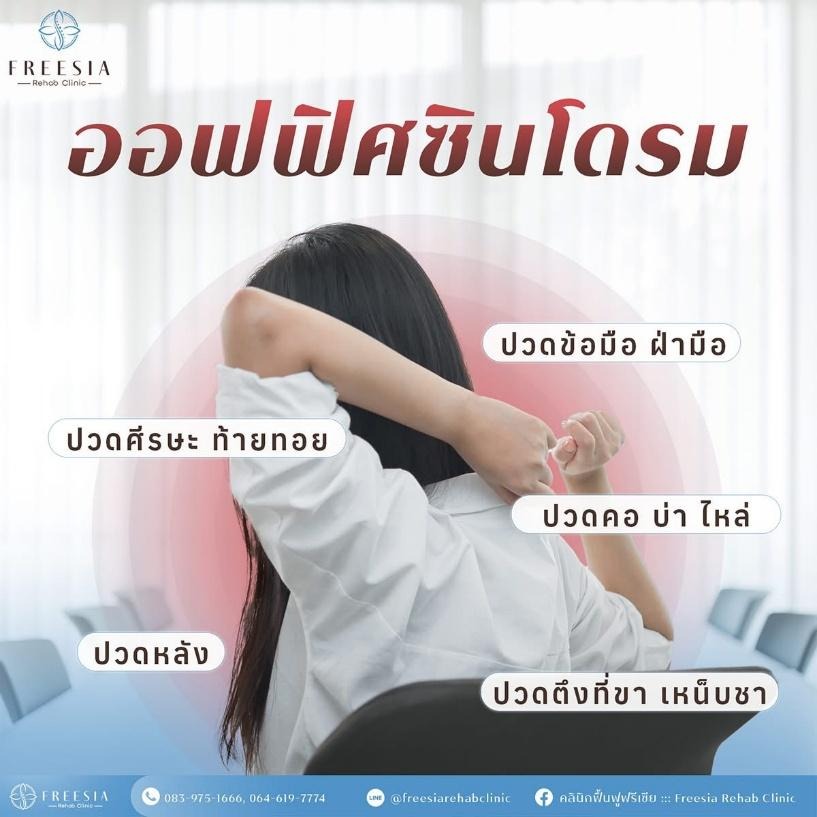
Sign 1: Daily Neck, Shoulder, or Upper-Back Pain That Feels “Normal”
When pain becomes chronic for long enough, the brain recalibrates its pain threshold until the discomfort starts to feel like your own “normal.” If you wake up with stiff shoulders, or your neck hurts regularly by the end of the workday, that is not normal.
Sign 2: Afternoon Headaches, Especially at the Back of the Head
Muscle-related headaches (tension-type headaches) are often linked to tension in the shoulder and upper-neck muscles. Many office syndrome patients experience unexplained headaches every afternoon and frequently reach for over-the-counter painkillers.
Sign 3: Eye Fatigue, Blurred Vision, or Eye Pain After Screen Work
Although the eyes themselves are not muscles, the eye and neck muscles that tense up from prolonged screen focus can cause eye fatigue, headaches around the eyes, or temporary blurred vision. These symptoms usually improve with rest and proper screen distance.
Sign 4: Numbness or Tingling in the Hands or Fingers, or Mild Weakness
Severely tight shoulder and neck muscles can compress nearby nerves or blood vessels, causing numbness or tingling in the arms, hands, or fingers. These symptoms should be evaluated by a physician, because other causes need to be ruled out — such as compression of the nerve at the wrist by thickened tissue (Carpal Tunnel Syndrome).
Sign 5: Waking Up Still Feeling Stiff and Achy Despite Sleeping
Normally, sleep should allow the muscles to recover. But if you wake up still in pain, it may mean the muscles are chronically inflamed — or that your sleeping position and pillow are not keeping your neck and back in a proper position.
What Should You Do If You Notice These Signs?
If you have two or three of the signs above and the symptoms have persisted for more than 2–4 weeks, we recommend getting assessed by a physician. The longer you leave it, the more the muscles become accustomed to staying tight and contracted — and the longer it will take to treat them fully.
If you are still experiencing symptoms, or you’re unsure what kind of care your condition needs, you can consult a rehabilitation medicine specialist directly at Freesia Rehab Clinic, Rama 3. Getting the right care from the start helps you return to living freely, the way you used to.
References
- Hush JM, et al. Patient satisfaction with musculoskeletal physical therapy care: a systematic review. Phys Ther. 2011;91(1):25-36.
- Gerwin RD. Myofascial pain: an update. Curr Pain Headache Rep. 2001;5(5):407-12.
- Fejer R, Kyvik KO, Hartvigsen J. The prevalence of neck pain in the world population. Eur Spine J. 2006;15(6):834-48.