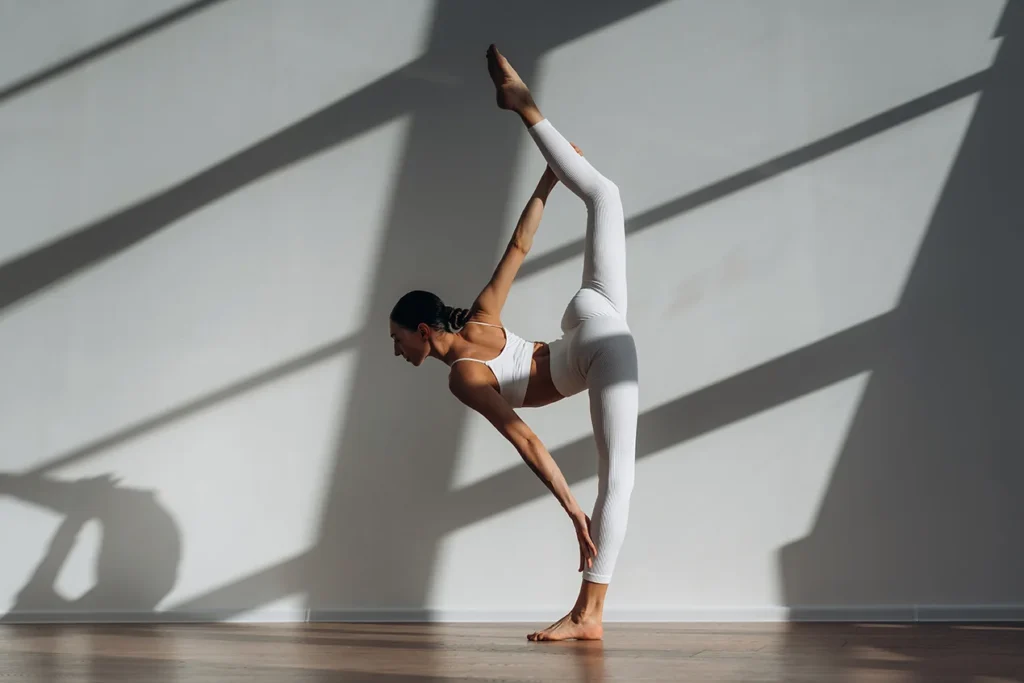
Yoga and Yoga Fly (aerial yoga) are highly popular forms of exercise because they build flexibility, core strength, and balance in both body and mind. However, even though yoga emphasizes gentleness, many practitioners still experience pain or injuries — especially when attempting poses beyond their ability, or without a proper understanding of correct body alignment.
Yoga injuries usually come from overstretching or from joint instability. Understanding and respecting your own limits is therefore essential.
5 Pains Commonly Seen in Yoga Practitioners
1. Lower Back and Sacroiliac Joint Pain
The most common complaint in yoga. It usually results from hyperextension in backbends, or from twisting the torso too forcefully while the core muscles fail to engage properly. This lack of control can lead to injury of the sacroiliac (SI) joint.
2. Hamstring Tendinopathy
This typically occurs in poses requiring a forward fold with straight legs (Standing Forward Fold or Downward-Facing Dog). When you try to stretch the hamstrings too aggressively, all the tension concentrates at the tendon attachment at the sit bone (Ischial Tuberosity), causing sharp pain in the gluteal fold or pain when sitting.
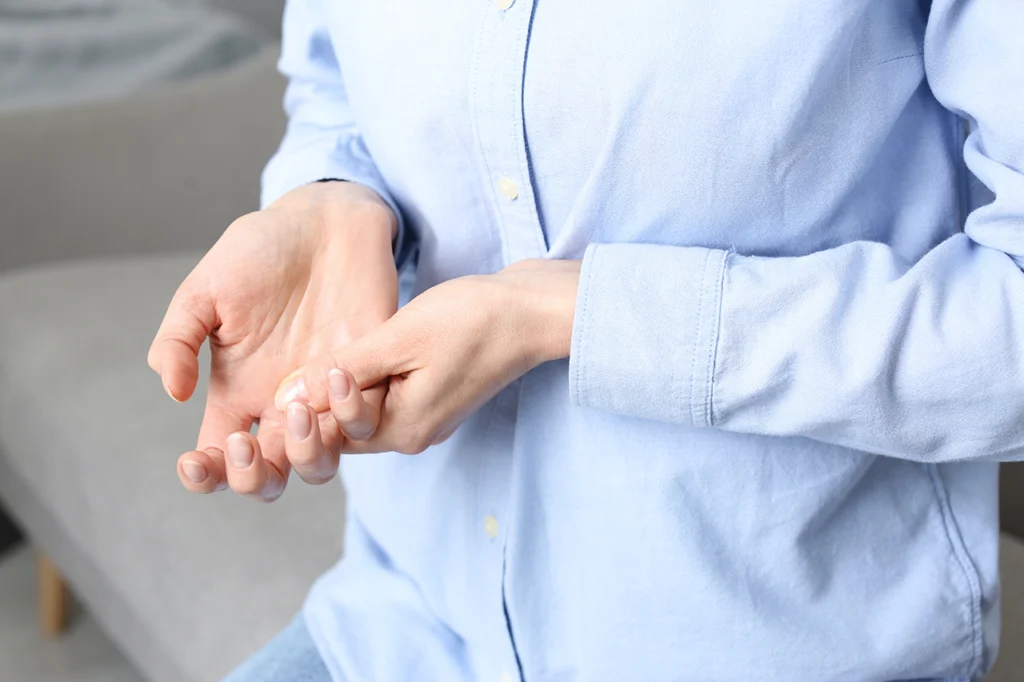
3. Wrist Pain
Common in poses that bear weight on the hands for long periods — such as Downward-Facing Dog, Plank, or arm balances. The cause is shifting too much weight onto the wrists instead of distributing it across the fingertips and letting the arm and shoulder muscles take the load, overloading the wrist joint.
4. Neck and Shoulder Tension
Usually caused by tensing the neck in poses that require balancing the head (such as Inversions or Headstand), or hunching the shoulders up toward the ears in weight-bearing arm poses. In aerial yoga, if the fabric isn’t wrapped tightly enough or the technique is wrong, compression or neck tension can occur as you hold yourself steady.
5. Knee Pain (Outer Knee)
Often happens in poses requiring excessive hip rotation (internal or external), such as Pigeon Pose or Lotus Pose. Forcing a strong hip rotation before the muscles are ready sends the twisting force into the knee joint — which is not designed as a primary rotation joint — instead of into the hip, causing pain along the side of the knee.

Prevention and Pain Management
1. Never Push the Edge
- Listen to your body: If you feel pain, stop immediately. A correct stretch should feel like a stretch — not pain or a burning sensation.
- Use props: Use blocks, straps, or aerial yoga fabric as tools to adapt poses to your own anatomy instead of forcing your body.
2. Stability Before Flexibility
- Core Activation: Learn to engage the core before every movement — especially in backbends — to protect the lower back.
- Locked joints: In weight-bearing poses on the hands, keep the elbows slightly bent and distribute the weight across the whole palm (especially the base of the fingers) to take pressure off the wrists.
3. Physical Therapy and Rehabilitation
- Rest and compress: For acute pain or tendon-area pain (such as the hamstring), rest from the activities that trigger it and use cold compresses to reduce inflammation.
- See a specialist: If the pain doesn’t improve with rest, and you suspect a muscle imbalance or a chronic injury, consult a rehabilitation physician or physical therapist. A specialist can assess you and design a program to strengthen the weak muscles and improve the flexibility of the tight ones.
Yoga is a practice of mindfulness and of listening to your body. Letting go of the expectation of perfect poses and focusing on what you feel inside your body is the key to practicing safely and sustainably.
If your pain doesn’t improve after resting, or comes with numbness or weakness, you can consult a rehabilitation medicine specialist at Freesia Rehab Clinic for proper diagnosis and treatment — before an injury or chronic pain sets in.