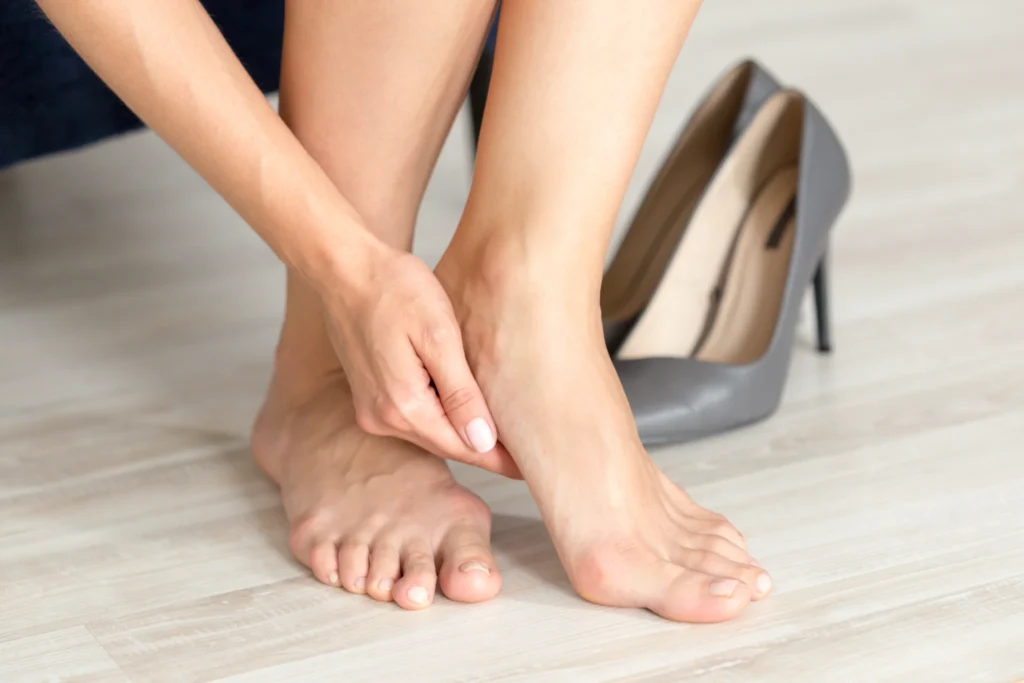

Now that exercise no longer requires a gym membership, “Walking Workout” has become an appealing option for city dwellers — it’s easy to do, needs almost no equipment, and can start almost anywhere: walking in a park, circling your neighborhood, or simply adding more walking into your day.
But once people start walking, problems often follow: pain in the sole of the foot, heel pain, or soreness around the ankle — especially when distance or pace ramps up too quickly. So how do you walk in a way that benefits your health without overloading your feet?
1. Increase Distance Gradually
Even though walking is a low-impact activity, if your body isn’t yet accustomed to long walks and you rapidly increase distance or frequency, the muscles, ligaments, and tissues of the feet can become overloaded and start to hurt. So if you’re just starting a Walking Workout, begin with a distance and pace your body can handle, then increase gradually as your fitness allows — instead of setting an ambitious mileage target on day one.
2. Choose Shoes Suited to Walking
Shoes are another crucial factor, because the feet absorb body weight and the repeated forces of walking — thousands of steps a day. Shoes that fit well, have adequate room in the toe box, and suit the activity make walking more comfortable. You don’t need the most expensive pair — choose shoes that fit snugly without pinching, feel comfortable, and don’t create pressure points at the heel or sole.
3. Don’t Overlook Muscle and Foot Strength
Foot pain isn’t caused by the feet alone — it also involves the calf muscles, ankles, and other muscle groups of the legs. If some muscles are weak or work out of balance, the feet may have to absorb more force while walking. Strengthening these muscles, along with balance training and ankle mobility work, helps the body better support the demands of walking.
4. Heel Pain? Don’t Push Through
If heel or sole pain starts — especially if it recurs or worsens — don’t force yourself to keep walking just because it feels like ordinary post-workout soreness. Foot pain can have many different causes. An assessment by a physical therapist will analyze your walking pattern, muscle strength, and the factors contributing to your pain, so a treatment and rehabilitation plan can be tailored to you — helping you return to walking and exercise more safely.
Walking Workout may be the simplest form of exercise, but reaping its long-term benefits starts with listening to your body: don’t ramp up distance too fast, choose the right shoes, and look after muscle strength at the same time. And if you’re experiencing foot or heel pain that interferes with walking, Freesia Rehab Clinic offers physical therapy programs that assess the cause of your symptoms individually and design a treatment and rehabilitation plan suited to your body — so you can get back to walking and exercising with confidence.
References:
- American College of Sports Medicine (ACSM). Walking for Exercise.
- American Academy of Orthopaedic Surgeons (AAOS). Plantar Fasciitis and Bone Spurs.
- World Health Organization (WHO). WHO Guidelines on Physical Activity.