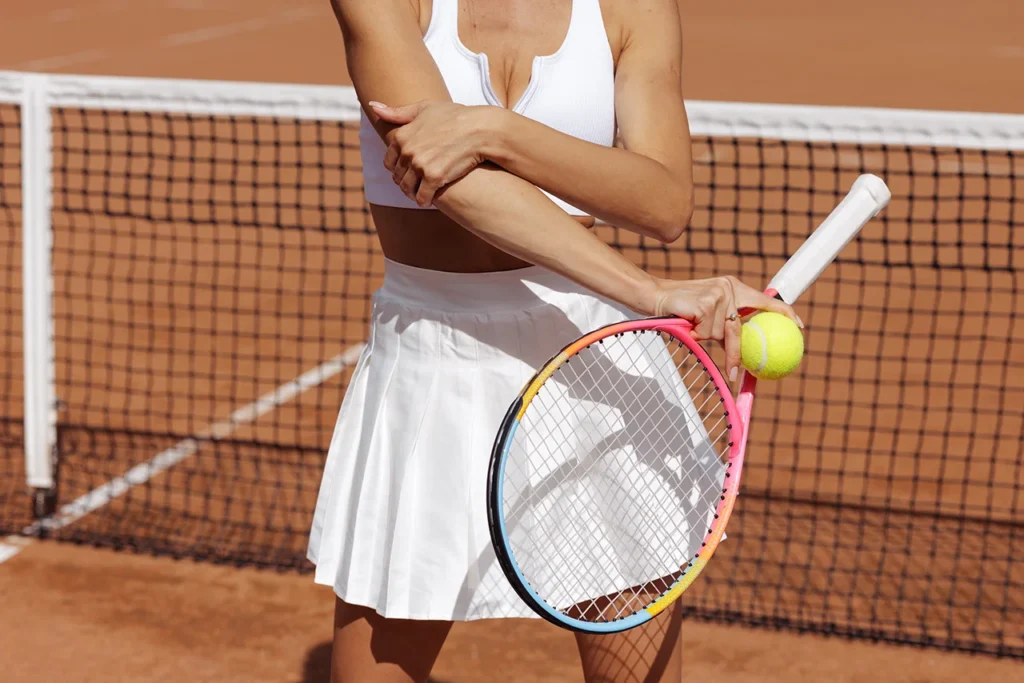
In today’s world of racket sports, there’s no denying that Pickleball and Padel are booming almost as fast as Tennis. But what follows these sports like a shadow for players who move their bodies every day is pain on the outside of the elbow — what medicine calls Lateral Epicondylitis. As a rehabilitation physician, I’ll be honest with you: the name “Tennis Elbow” is starting to sound a bit dated, because these days I see just as many cases coming from Pickleball and Padel players. And importantly, this condition isn’t always a temporary bout of “inflammation” — it is degeneration of the tendon that absorbs repeated impacts faster than it can repair itself.
Why Do Racket Sports Punish the Elbow?
The main cause doesn’t start at the elbow itself, but in the wrist extensor tendon that anchors to the bony bump on the outside of the elbow. It gets overloaded when we repeat these movement patterns:
An Incomplete Backhand
Flicking the wrist to send the ball back, instead of generating power from the shoulder and trunk, forces the small tendons at the elbow to bear more than they can handle.
Vibration from Equipment
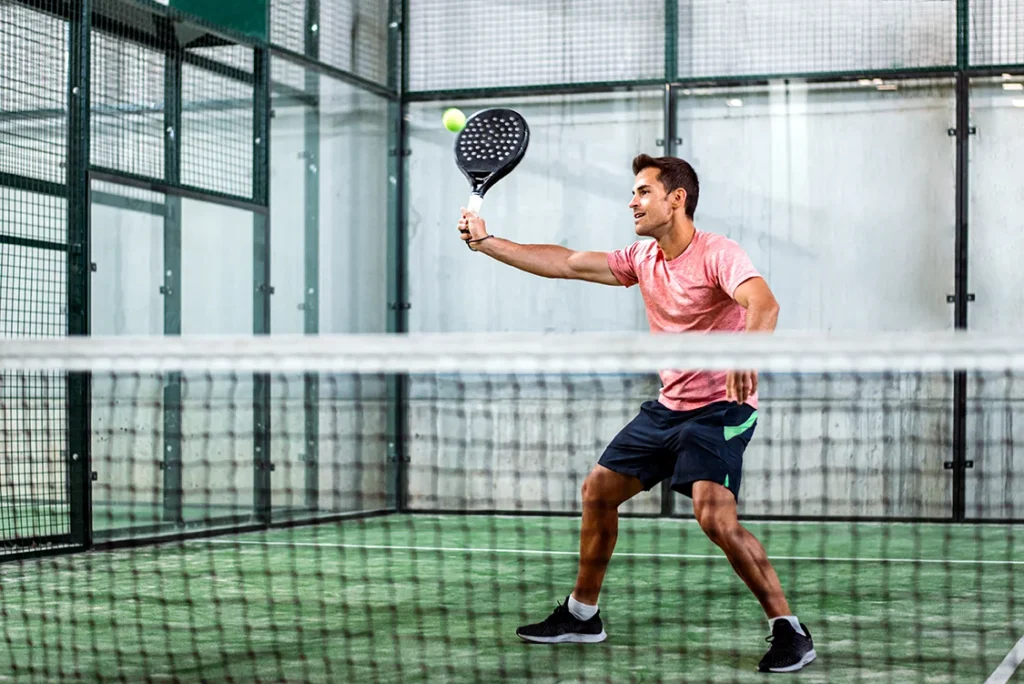
A solid Padel paddle (no strings) or a Pickleball paddle transmits more vibration than a tennis racket, and those vibrations travel straight into the elbow.
Playing Frequency
Playing every day without rest days lets micro-tears in the tendon accumulate until they turn into scar tissue and chronic pain.
Check Your Signals: Just Tired, or “Tennis Elbow”?
Try observing your symptoms. If you tick these three boxes, there’s a good chance the elbow tendon is starting to have problems:
- A clear tender spot: Pressing on the bony bump on the outside of the elbow produces a sharp, radiating pain.
- Pain when bending the wrist back: Such as turning a doorknob, lifting a coffee cup, or lifting something heavy palm-down.
- Weaker grip: Your hand feels weak when gripping the racket, or you drop things more often than before.
Treatment: Restoring the Elbow to Full Fitness
Treatment today isn’t just about taking painkillers — it’s about “remodeling” the tendon:
| Treatment | What It Does |
|---|---|
| Shockwave Therapy | Uses shockwaves to stimulate a degenerated tendon to restart its own repair process (re-healing) |
| High Power Laser | Reduces pain and inflammation in the acute phase and speeds up tissue recovery |
| Tennis elbow splint | An elbow strap that reduces the pull of the muscle before it reaches the bony bump, letting you play without making the pain worse |
| Eccentric Exercise | Training the muscle by loading it while it lengthens — the key to building tendon strength long-term |
Prevention: Playing for the Long Haul
If you don’t want to hang up your paddle for good, prevention is the answer:
1. Check Your Grip Size
A grip that’s too small or too large forces the wrist muscles to work harder than usual. Consult a specialist to find the paddle size that fits your hand.
2. Warm Up Your Tendons Before Taking the Court
A wrist extensor stretch — palm down, using your other hand to pull the wrist toward you, held for 15–20 seconds — is a great way to prepare.
3. Power from “Core & Shoulder”
Adjust your stroke so the power comes from the hips and shoulders, and cut down on wrist flicks.
An elbow injury isn’t the end of the hobby you love — it’s a warning sign telling us to take ca