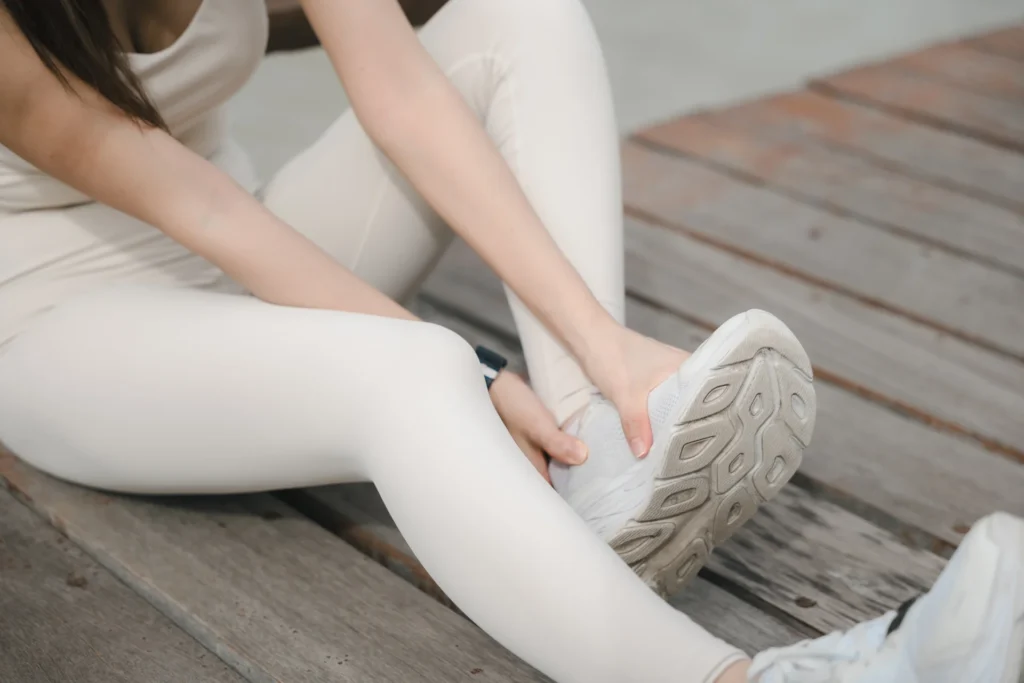
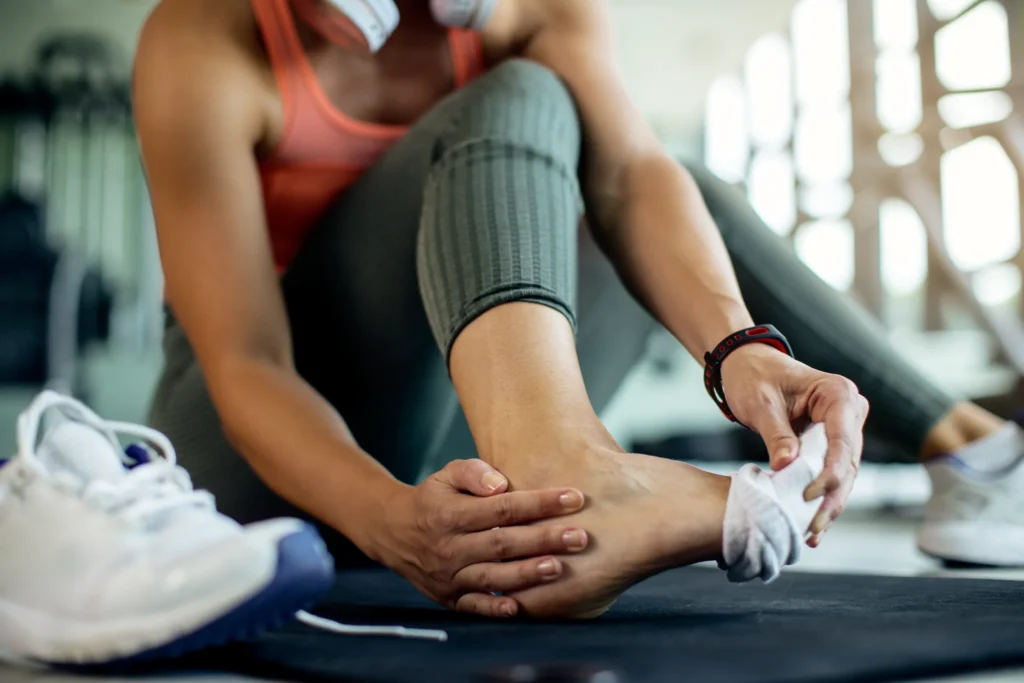
One of my patients walked in with chronic knee pain that had lasted almost a year. He had tried several pairs of shoes, stretching, and rest, but nothing improved. When I finally examined his feet, the answer was very clear — he had flat feet, and had never known it.
What Are Flat Feet, and Why Do They Hurt Even When “Just Walking”?
Flat feet (Flat Foot or Pes Planus) is a condition in which the inner arch of the foot is nearly absent or has collapsed so the sole rests almost flat against the ground. When walking, the ankle rolls inward (called Overpronation), sending body weight in the wrong direction. The consequences don’t stop at the foot — they “run up” the kinetic chain, causing ankle pain, foot pain, knee pain, hip pain, and lower back pain. Research in the Journal of Foot and Ankle Research confirms that foot misalignment is directly associated with joint pain at multiple levels.¹
Shoes That “Feel Comfortable” Aren’t the Same as Shoes That Are “Good for Flat Feet”
This is the most common misconception. Many patients say slip-on shoes feel “comfortable” — but that only means the shoes don’t feel awkward; it doesn’t mean they’re actually supporting your feet.
What Shoes for Flat Feet Should Have:

1. Motion Control Shoes or Stability Shoes
These shoes have a firmer-than-usual inner structure that limits inward ankle rolling and reduces the load traveling up to the knees and hips. The APMA (American Podiatric Medical Association) specifically recommends these types of shoes for people with Overpronation.²
2. Arch Support Firm Enough to Matter
It’s not enough to have a soft insole — the inner arch needs real support. If a well-designed shoe still isn’t enough, custom orthotics made to the shape of your foot are a very effective option. Research from the Cochrane Database shows custom foot orthoses significantly reduce foot pain and improve weight distribution.³
3. A Sole That Doesn’t Twist Easily
Test it simply by twisting the shoe across its width — if it twists very easily, the structure isn’t strong enough for flat feet.
Footwear to Avoid:
Thin slip-on sandals with no structure, minimalist shoes with no support, and walking barefoot on hard surfaces for long periods — all of these compress the arch and make symptoms worse.
Flat Feet Can Be Managed
The key point I want you to know is that flat feet can be managed — through proper shoe selection, orthotic inserts, or rehabilitation to strengthen the muscles around the ankle. Many people don’t know they have flat feet until they develop foot pain that may spread to the knees or back.
If you have foot pain, you can consult a rehabilitation medicine specialist at Freesia Rehab Clinic for an assessment, to find the cause, and to receive appropriate treatment along with guidance on choosing shoes that truly match your problem.
References
- Menz, H.B. et al. (2019). Foot pain and footwear in older people. Journal of Foot and Ankle Research, 12(1).
- American Podiatric Medical Association. (2023). Choosing the Right Athletic Shoe. APMA Consumer Guide.
- Hawke, F. et al. (2008). Custom-made foot orthoses for the treatment of foot pain. Cochrane Database of Systematic Reviews.