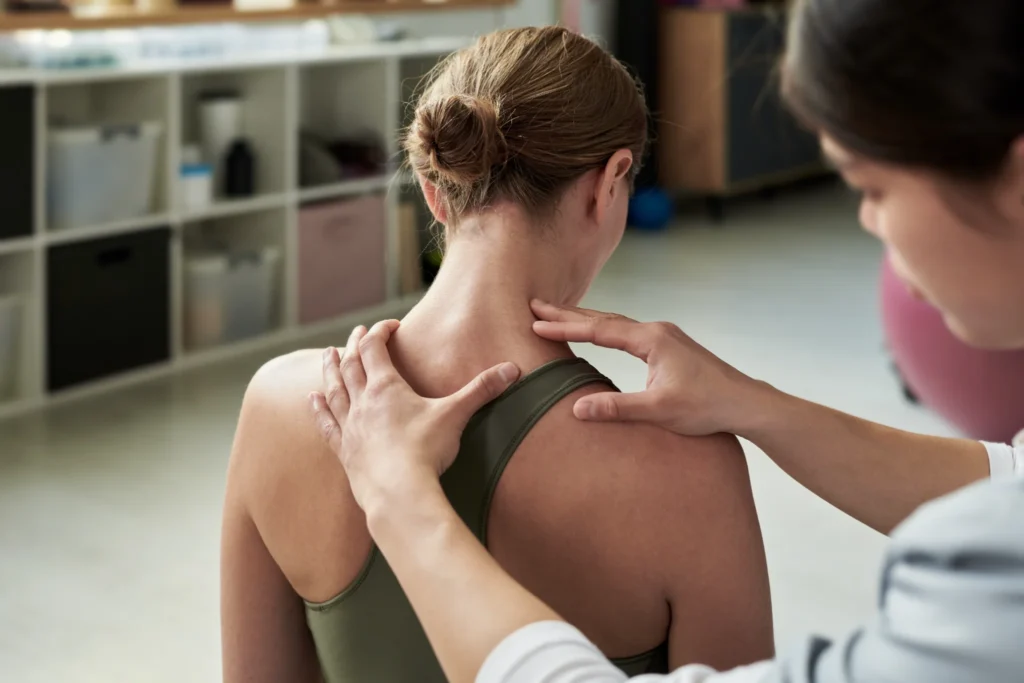

Western dry needling vs. Chinese acupuncture — how are they alike and how are they different? This is a question patients often wonder about and frequently ask me. When needling comes up, most people picture traditional Chinese medicine acupuncture first. So how does Western dry needling differ from Chinese acupuncture? Today I have the answers for you.
The Differences
Western dry needling (Dry Needling) and Chinese acupuncture (Acupuncture) do share one similarity: both use small, sterile, solid filiform needles inserted into the body. But the two approaches differ significantly in their principles, techniques, and applications, as follows.
Principles
Dry needling (Western): Grounded in Western medicine, it targets the neuromuscular and myofascial systems to treat trigger points and relieve muscle pain.
Chinese acupuncture: Grounded in Traditional Chinese Medicine (TCM), it focuses on balancing the body’s energy (Qi) along meridians to promote overall health and treat various conditions.
Techniques
Dry needling (Western): A solid needle is inserted directly into a muscle’s trigger point, and the needle may be moved around within the trigger point area. The needle is usually not left in place for long.
Chinese acupuncture: Small solid needles are inserted at specific acupuncture points along the meridians, and the needles are left in place for about 15–30 minutes.
Applications
Dry needling (Western): Used primarily to treat musculoskeletal pain — muscle tightness, trigger points, and pain syndromes. It can also improve joint range of motion and muscle function.
Chinese acupuncture: Can treat a wide range of conditions, including musculoskeletal pain, but also digestive problems, headaches, anxiety, insomnia, and allergies — with an emphasis on restoring balance and promoting overall health.
Summary
Practitioners: In Thailand, Western dry needling can be performed by rehabilitation physicians, while Chinese acupuncture is performed by traditional Chinese medicine practitioners, or by licensed physicians who have completed training in Chinese-style acupuncture.
If you’re interested in Western dry needling to release tight, painful muscle spots, you can consult a rehabilitation medicine specialist at Freesia Rehab Clinic, a rehabilitation and physical therapy clinic on Rama 3.