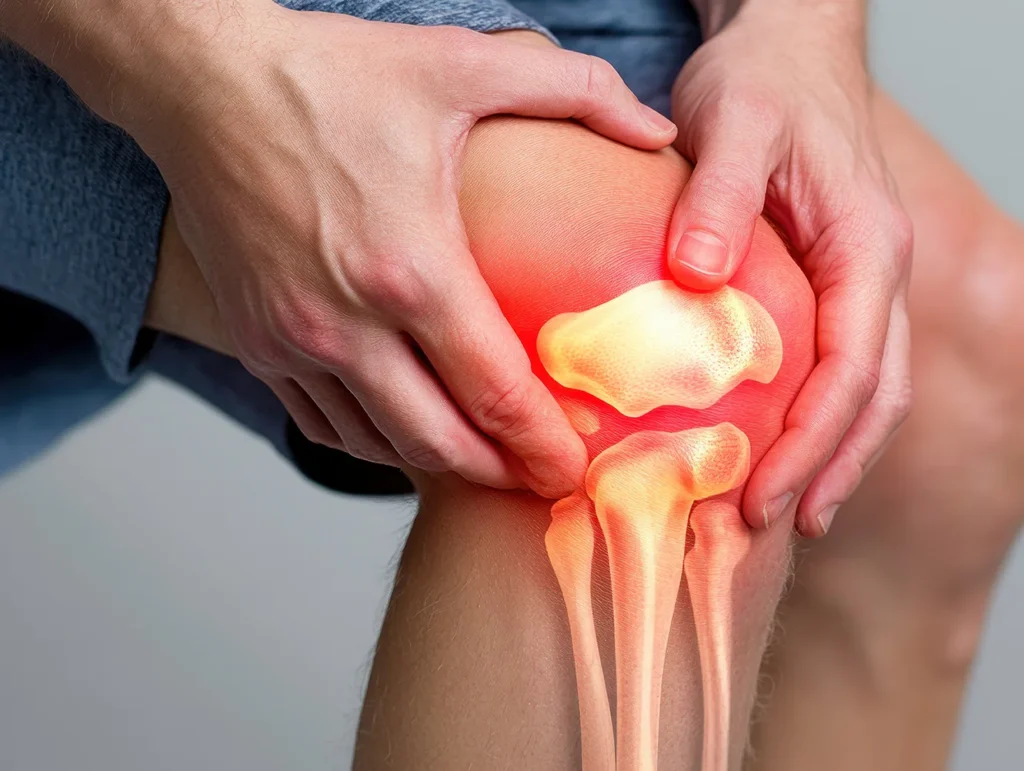
The Anterior Cruciate Ligament (ACL) is one of the key ligaments of the knee, providing stability and supporting movement. ACL injury is one of the most common knee injuries — especially among athletes who play high-impact sports such as football, basketball, and skiing. This article explains the causes, symptoms, and comprehensive rehabilitation for ACL injuries.

Causes of ACL Injury
An ACL injury usually occurs when the ligament is stretched or torn beyond its limit, typically due to sudden or awkward movements. Common causes include:
- Sudden changes of direction: Such as twisting or turning sharply during sports.
- Landing incorrectly: Jumping and landing in a poor position can place stress on the ACL.
- Direct impact: Such as a blow to the knee in contact sports.
Symptoms of ACL Injury
The severity of an ACL injury can vary, but common symptoms include:
- A loud “pop” or a feeling that the joint gave way: You may hear or feel this at the moment of injury.
- Rapid swelling: Swelling within a few hours of the injury due to bleeding inside the knee joint.
- Knee instability: A feeling that the knee may buckle or give out during movement.
- Pain and limited motion: Difficulty bending or straightening the knee.
Accurate diagnosis usually requires a physical examination together with imaging, such as MRI.
Treatment Options for ACL Injury
Treatment depends on the severity of the injury and the patient’s activity level.
Non-Surgical Treatment
- Suitable for partial tears or patients who are not highly active.
- Physical therapy: In the early phase after injury, the focus is on reducing swelling using physical therapy modalities such as high-power laser. In later phases, the focus shifts to strengthening the muscles around the knee and restoring movement.
- Assistive bracing: Wearing a knee support brace to improve stability.
Surgical Treatment
- Patients with large tears, or those with high activity levels such as athletes, usually require surgery.
- ACL reconstruction surgery, using a tendon graft from another part of the body, such as the patellar tendon or hamstring tendon.
If you have recently injured your knee, have a swollen knee, or sustained a knee injury from sports, you can consult a doctor together with physical therapy to reduce symptoms in the acute phase. And if you have already had ACL reconstruction surgery and want appropriate rehabilitation, you can consult a rehabilitation medicine specialist at Freesia Rehab Clinic, Rama 3.