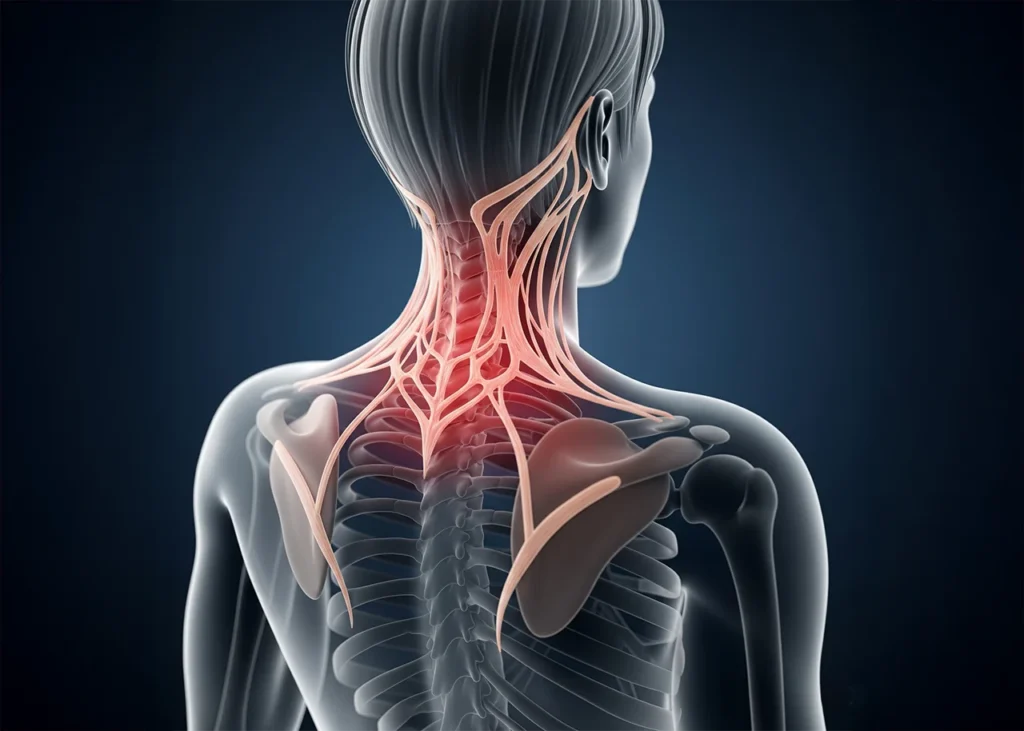

Many people with chronic neck, upper back, or shoulder pain try to fix the problem with massage, pressure-point work, or neck stretching alone — but before long, the pain returns. If this keeps happening to you, a common culprit is weak muscles around the shoulder blade, causing it to move abnormally — a condition medically known as Scapular Dyskinesis. This may well be the true source of the pain you’re experiencing.
What Is Scapular Dyskinesis?
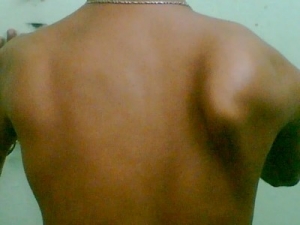
Normally, the shoulder blade (scapula) serves as a stable base that lets the shoulder joint move freely. When we raise our arm, the scapula must rotate and glide in coordination. In Scapular Dyskinesis, this balance is lost — for example, the shoulder blade juts outward (Winged Scapula) or fails to rotate upward as it should.
Why Does It Cause Pain?
When the base (the scapula) is unstable, the body tries to compensate by making other muscles “do the compensating work” (Compensatory Pattern):
- Upper Trapezius and neck muscles: They must pull harder to prop up the shoulder, causing stiff, tight shoulders and neck pain that can radiate into headaches.
- Pinched shoulder tendons: When the scapula doesn’t move in sync, the space inside the shoulder joint narrows until the tendons get rubbed (Impingement), leading to chronic inflammation.
Causes and Risky Habits
Most causes stem from the modern lifestyle:
- Posture: Sitting with rounded shoulders, a hunched back, or spending long hours looking down at a phone tightens the chest muscles, pulling the scapula forward and down.
- Muscle weakness: Especially in the muscles that stabilize the scapula (such as the Serratus Anterior and Lower Trapezius), which are rarely used in daily life.
- Tightness: An overly tight Pectoralis minor (chest muscle) pulls the scapula out of balance.
Prevention and Rehabilitation Guidelines
The key is not occasional massage for temporary relief, but “rebalancing” through training the muscles around the shoulder blade:
1. Stretch Tight Muscles (Stretch)
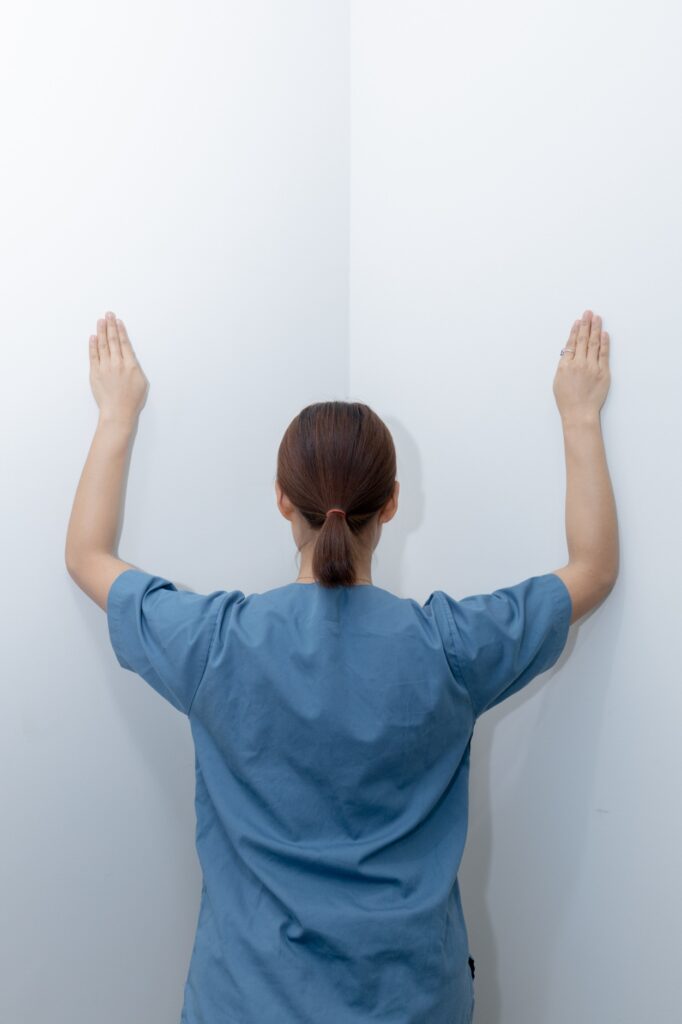
- Chest stretch: Stand in a corner of the room or in a doorway, place your arms against the wall, and lean your body forward. Hold for 20–30 seconds to open up the shoulders and reduce the pull on the scapula.
2. Train Scapular Awareness (Scapular Setting)
- Practice sitting up straight, take a breath, then gently “squeeze the shoulder blades together and pull them downward” (imagine trying to tuck them into the back pockets of your pants). Hold for 5–10 seconds to train the brain to command the scapula correctly.
3. Strengthen the Muscles That Support the Scapula (Strengthening)
- Scapular Wall Slides: Stand with your back against the wall, raise your arms against the wall into a V shape, then slowly slide your elbows down into a W shape, keeping your back and shoulder blades flat against the wall. This trains the scapula’s movement systematically.
- Push-up Plus: Do a push-up (from the knees is fine); at the top of the press, push a little further until you feel the shoulder blades spread apart. This trains the Serratus Anterior, which anchors the scapula flat against the rib cage.
Treating neck, shoulder, and upper back pain caused by scapular dyskinesis takes “discipline” and “consistency.” Practicing these muscle exercises just 10–15 minutes a day builds a stable foundation for your body in the long run. Combined with better desk ergonomics, once-chronic pain will gradually improve without relying solely on painkillers. If the pain doesn’t improve after trying these exercises, or if you also have numbness and weakness, come consult a rehabilitation physician or physical therapist at Freesia Rehab Clinic for a proper assessment and a treatment program suited to you.