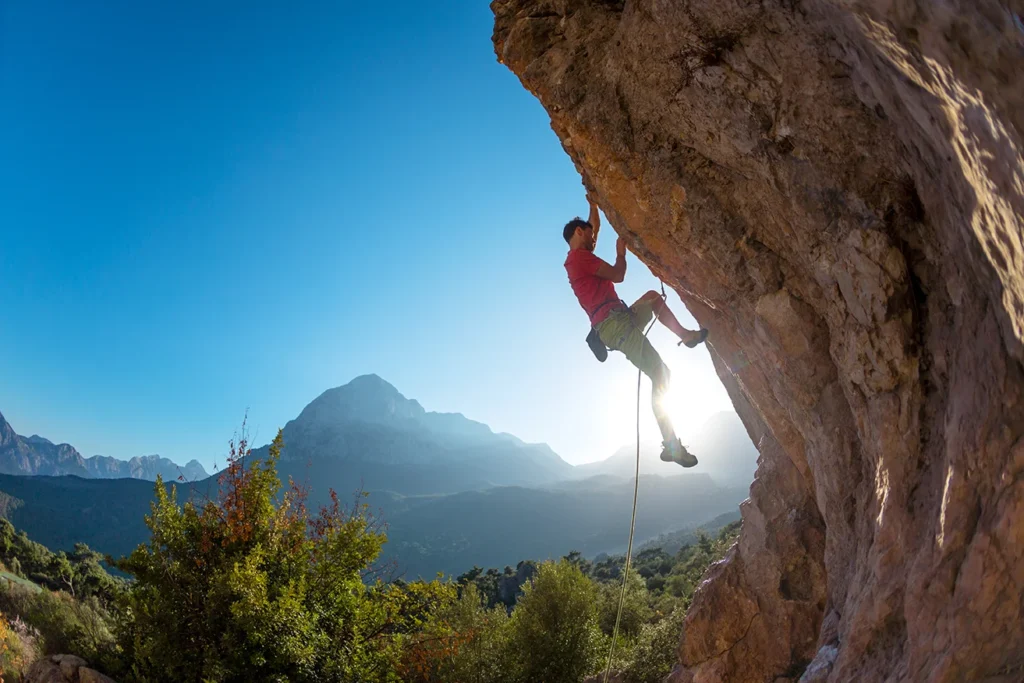
Climbing is a sport that demands strength, flexibility, and intense focus. Although it’s a fun and challenging activity, musculoskeletal injuries are common — particularly from repetitive loading or high levels of exertion. This article covers the top 5 injuries climbers commonly face, along with prevention strategies and basic self-care guidelines, so you can climb safely and enjoyably for the long term.
The 5 Most Common Musculoskeletal Injuries in Rock Climbers
Climbers tend to get injured in the areas that bear weight or exert the most force, namely:
1. Finger pulley injuries

The most common — and most climbing-specific — injury is a tear of the pulleys, the tissue that holds the finger flexor tendons close to the finger bones. Climbing with a full “crimp” grip (bending the fingertips to grip holds) is the main cause. Symptoms are pain and swelling, sometimes with an audible “pop” at the moment of injury, at the base of the finger near the palm. The middle and ring fingers are most often affected.
2. Medial elbow tendinitis (climber’s elbow / medial epicondylitis)
This is inflammation of the tendons on the inside of the elbow, where the wrist- and finger-flexing muscles attach. It usually results from overusing the forearm muscles through repetitive gripping and pulling that’s too heavy. The symptom is a deep ache on the inside of the elbow, especially when gripping or lifting objects.
3. Shoulder pain syndromes (shoulder impingement syndrome and rotator cuff tendinopathy)
The shoulder is a highly mobile joint that bears heavy loads. Repeated overhead movements or stabilizing yourself while climbing can inflame or tear the rotator cuff tendons. The symptom is shoulder pain — especially when spreading the arm out or raising it overhead — sometimes with a feeling of instability, or pain that radiates.
4. Lower back pain
Climbing requires heavy use of the core muscles to maintain balance and control movement. Poor positioning, balancing on small holds, or overloading can strain or inflame the lower-back muscles and ligaments. The symptom is tight, aching pain, sometimes with visible muscle spasm in the back.
5. Ankle sprains
Even though climbing emphasizes the upper body, the ankles and feet still matter — especially in bouldering, when landing on the floor, or dropping onto the pads unevenly. Symptoms are pain, swelling, and difficulty walking or bearing weight around the ankle, which can lead to more severe ligament injuries around the ankle.
Injury Prevention
The most important thing for climbers is preventing overuse injuries caused by excessive loading:
● Warm-up and cool-down
Before climbing, warm up with 5–10 minutes of light exercise and dynamic stretches — moving while stretching — for the shoulders, wrists, and fingers. After climbing, always do static stretches, holding the stretch to release the muscles.
● Proper climbing technique
Rely more on your feet and legs to take your weight and push you upward, reducing the pulling load on your arms and fingers. Try to avoid full crimping too often, and practice open-hand gripping more.
● Balanced strength
Train your antagonist muscles to build balance — for example, strengthening the finger and wrist extensors to counter the flexors used in gripping, and training the muscles around the shoulder to improve shoulder stability.
● Rest and recovery
Most overuse injuries come from insufficient rest. Give your muscles time to repair themselves, especially the heavily used areas. If you feel tightness or pain, rest or reduce training intensity for at least 24–48 hours.
Basic Treatment
Once pain has appeared, first aid following the R.I.C.E. principle remains essential.
| Principle | Description |
|---|---|
| R (Rest) | Rest the injured area. Avoid activities that cause pain, especially climbing at high difficulty grades. |
| I (Ice) | Ice the painful or swollen area for about 15–20 minutes to reduce inflammation and swelling during the first 48 hours. |
| C (Compression) | Wrap a bandage around the injured area (such as the ankle or wrist) gently to reduce swelling, taking care not to wrap too tight. |
| E (Elevation) | Raise the injured area above the level of the heart (if possible) to help reduce swelling. |
If the pain doesn’t improve within 2–3 days, or there are severe signs — significant swelling, inability to move, or inability to bear weight — see a rehabilitation medicine physician promptly for an accurate diagnosis. The doctor may recommend additional treatment, such as anti-inflammatory medication, physical therapy, physical modalities like high-power laser, or other specialized treatments, so you can return to climbing with confidence and strength. And don’t dismiss minor aches — addressing an injury early is the key to climbing continuously for years to come. If you’re a climber dealing with either acute or chronic pain, you can consult a rehabilitation medicine specialist at Freesia Rehab Clinic.